
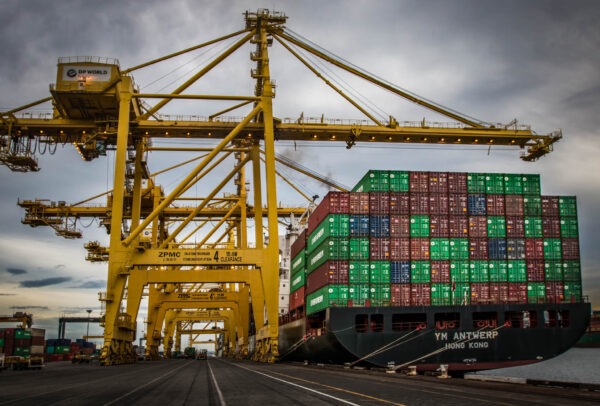
The global trade architecture entering 2026 is increasingly defined by a paradox of record-setting balances and widening geopolitical fault lines. On Wednesday, January 14, Beijing released preliminary customs data indicating that China closed 2025 with a trade surplus approaching $1.2 trillion, an unprecedented figure despite a year marked by escalating tariffs, export controls, and investment restrictions imposed by Western economies. Roughly comparable in scale to the annual GDP of a major energy exporter, the surplus underscores a structural shift in global trade flows. While direct exports to the United States have softened under the cumulative weight of protectionist policies, China has redirected industrial output toward Southeast Asia, Africa, and Latin America, leveraging competitive pricing and state-supported manufacturing to offset reduced access to Western markets.
This economic resilience now intersects with a volatile diplomatic fault line. Earlier this week, former U.S. President Donald Trump, now the leading Republican figure shaping the 2026 trade debate, signaled support for a sweeping 25% tariff on countries maintaining commercial ties with Iran, citing regional instability and security concerns. Though framed as pressure on Tehran, the proposal is widely interpreted by policy analysts as a form of secondary sanction that would disproportionately affect China, Iran’s largest energy customer. Unlike previous bilateral tariff disputes, such measures would compel third-party economies to choose between U.S. market access and continued engagement with sanctioned states. China’s Ministry of Foreign Affairs condemned the idea as “coercive,” raising concerns that the fragile tariff ceasefire reached in late 2025 could rapidly unravel.
The European Union illustrates the complexity of this evolving landscape. Recent EU trade data shows that imports of Chinese wind power equipment surged sharply in 2025, with industry estimates placing growth near 60%, driven by pricing advantages that European producers have struggled to match. As Brussels seeks to de-risk strategic supply chains, it remains heavily reliant on Chinese clean-energy technology to meet its 2030 climate targets. This contradiction, industrial vulnerability versus climate urgency, is emerging as a central tension in transatlantic economic discussions.
Elsewhere, the once-celebrated “China Plus One” strategy is undergoing reassessment. Washington increasingly views parts of ASEAN not only as alternative manufacturing bases but also as potential conduits for Chinese transshipment. With Indonesia reported to be nearing a separate trade understanding with the United States, the region appears to be fragmenting into politically “trusted” and “high-risk” zones. For multinational firms, the takeaway is increasingly clear: the trade war has not ended; it has evolved. Bilateral tariffs have given way to a more fluid contest defined by rules of origin, secondary sanctions, and geopolitical alignment, reshaping how capital and goods move across borders.
https://eastasiaforum.org/2026/01/14/spectre-of-uncertainty-haunts-us-southeast-asia-trade/
https://www.globaltimes.cn/page/202601/1353179.shtml
https://www.theguardian.com/us-news/2026/jan/13/donald-trump-supreme-court-tariffs-iran-us-trade