
As of Friday, January 16, 2026, the global trade landscape appears to be shifting from a fragile truce toward a more confrontational phase, marked by conflicting economic signals and rising geopolitical risk. The defining development of this week was the release of Beijing’s 2025 economic data on Wednesday, revealing figures that complicate Western efforts to recalibrate trade relations with China. Despite a year shaped by intensified tariffs and export controls, China recorded an all-time high trade surplus of nearly $1.2 trillion. Roughly comparable to the GDP of a major European economy, the figure suggests that while trade pressures have altered export destinations, they have not fundamentally constrained China’s external trade position. Although exports to the United States fell by roughly 20% in 2025, Chinese firms expanded shipments to the Global South, with exports to Africa rising by about 26% and exports to ASEAN economies increasing by more than 13%.
This economic resilience now intersects with a volatile new geopolitical variable introduced by the White House earlier this week. On Monday, President Trump announced a proposed 25% tariff on “any country doing business with the Islamic Republic of Iran,” a measure framed as a response to recent unrest involving Tehran but one that has broad secondary implications. China, Iran’s largest trading partner, remains a major purchaser of Iranian crude, much of it routed through independent “teapot” refineries operating within existing sanctions gray zones. Analysts estimate that China absorbs the vast majority of Iran’s oil exports. Unlike earlier bilateral tariff disputes, this proposed secondary sanction framework pressures third-party states to weigh energy security against continued access to the U.S. market. Beijing’s Foreign Ministry has responded by pledging to “take all necessary measures” to protect national interests, raising the risk of renewed diplomatic escalation that could undermine the limited stabilization achieved under the “Busan Rapprochement” reached late last year.
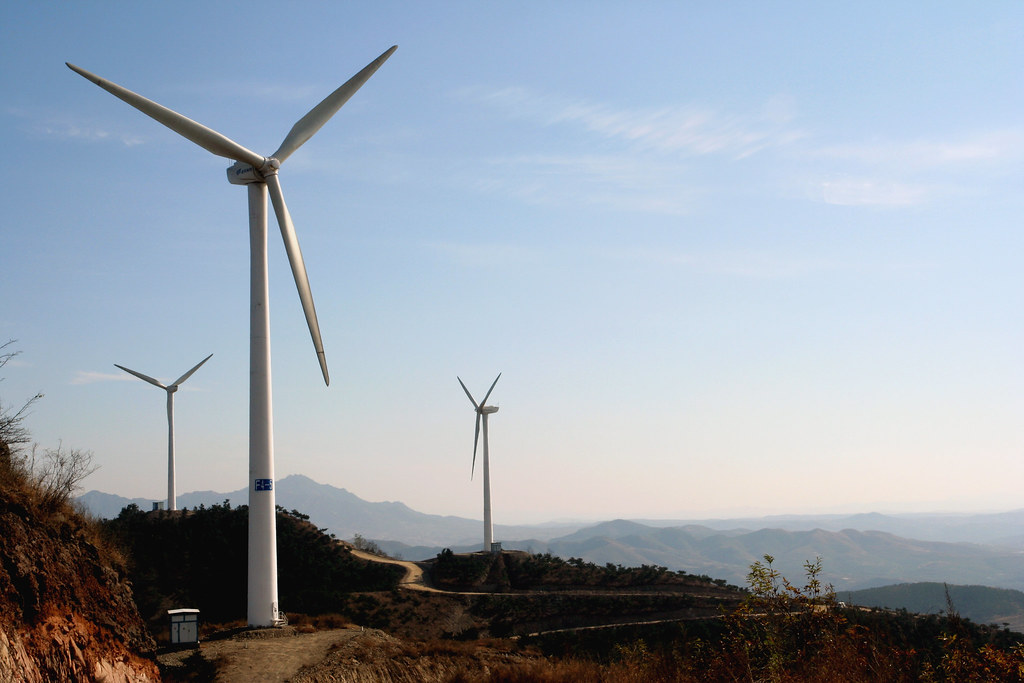
The spillover effects are particularly visible in the European Union, where policymakers face a mounting strategic contradiction. Data released this week show that even as Brussels pursues supply-chain de-risking, reliance on Chinese green technology has intensified. Chinese exports of wind power turbines to the EU surged by 65.9% in 2025, reflecting price advantages that European producers continue to struggle to match. For EU governments, this creates a structural dilemma: achieving ambitious 2030 climate targets increasingly depends on Chinese imports, even as political pressure grows to align more closely with Washington’s tougher stance toward Beijing.
In Southeast Asia, the evolving environment is testing the durability of the “China Plus One” strategy. While India appears relatively insulated from Iran-related trade fallout due to minimal commercial exposure to Tehran, ASEAN economies face closer scrutiny. Supply-chain analysts warn that U.S. authorities may expand investigations into so-called “origin-laundering,” particularly in countries such as Vietnam and Thailand that have absorbed redirected Chinese manufacturing. As a result, the global trading system is gradually fragmenting into differentiated risk zones, with heightened exposure for economies linked to both China and sanctioned states, and comparatively lower risk for countries that have more fully disentangled themselves from sanctioned trade networks.
https://apnews.com/article/china-economy-trade-surplus-record-59f6fcc80ee3afc204a024f57766d319
https://www.globaltimes.cn/page/202601/1353179.shtml
https://www.theguardian.com/us-news/2026/jan/12/trump-tariffs-iran