
Jan 20, 2026
As trading desks open this Tuesday, January 20, 2026, the global economy is absorbing a more complex reality beneath last week’s headline figures. Official data confirms that China closed 2025 with a record $1.2 trillion trade surplus, yet reporting emerging today suggests the achievement masks growing internal strain. A detailed investigation published this morning indicates that the much-touted “pivot to the Global South” is imposing high costs on Chinese exporters, particularly in the form of compressed margins and increasingly demanding labor conditions. Interviews with frontline sales staff, including Aimee Chen in the pet products sector, illustrate how the replacement of stable US contracts with fragmented demand across South America and Africa has pushed firms into a “high-volume, low-margin” model. Longer payment cycles and elevated default risks in these markets are contributing to what analysts describe as “profitless prosperity,” a pattern in which revenues expand while profitability continues to erode, with industrial profits reported to have fallen 13.1% year-on-year in November.
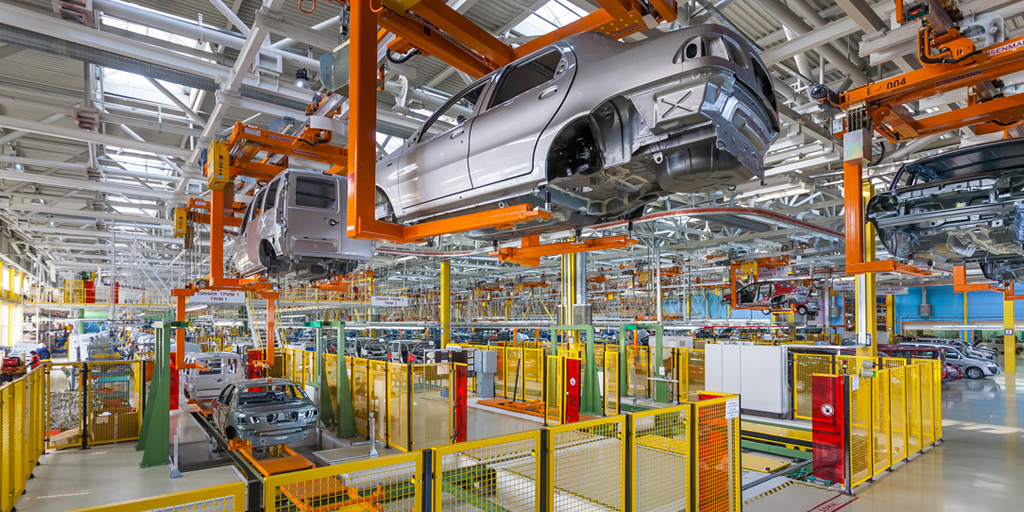
These internal pressures are now intersecting with renewed external uncertainty following President Trump’s recent “Iran tariff” warning, which is already disrupting strategic planning across the global automotive industry. The proposed 25% tariff on “any nation doing business with Iran,” announced last week, has heightened risk exposure for manufacturers in India, Turkey, and China, all of which maintain commercial ties with Tehran. For supply chain managers, compliance risk is no longer limited to product origin but increasingly tied to the diplomatic posture of supplier countries. Reporting from Automotive Manufacturing Solutions suggests that manufacturers are reassessing production footprints as they attempt to separate “US-compliant” supply chains from those potentially exposed to secondary sanctions. Industry executives warn that this uncertainty is making medium-term production planning extremely difficult, particularly for components sourced from multi-jurisdictional hubs such as Turkey.
At the same time, Beijing is reinforcing its continental trade strategy as a partial buffer against maritime and sanctions-related vulnerabilities. In a press briefing on January 19, the Chinese Foreign Ministry confirmed that China’s trade volume with the five Central Asian states exceeded $100 billion for the first time in 2025. Officials emphasized the strategic value of this expansion, highlighting the role of overland corridors that are less exposed to naval enforcement or tariff escalation. Through the “China–Central Asia” framework, Beijing is seeking to stabilize access to energy and industrial inputs while reducing exposure to geopolitical chokepoints, effectively broadening what policymakers describe as economic resilience.
Despite these shifts, the United States remains a critical variable in the global trade equation. Contrary to full-scale decoupling narratives, some American firms operating in China continue to report operational stability. A recent survey by the American Chamber of Commerce in China, referenced in official briefings, indicates that more than half of US companies expect to remain profitable in 2025, with roughly 60% planning to expand investment. This data complicates assumptions of an irreversible commercial rupture, suggesting that while political relations remain strained, economic interdependence persists at the firm level. For consultation clients, the immediate takeaway for the week of January 20 is straightforward: assess exposure not only to China itself but also to the margin health and liquidity position of Chinese suppliers, and conduct urgent Tier 2 reviews for partners operating in jurisdictions vulnerable to the emerging Iran-related sanctions risk.
References
https://www.fmprc.gov.cn/mfa_eng/xw/fyrbt/202601/t20260119_11815289.html