
13 Feb 26
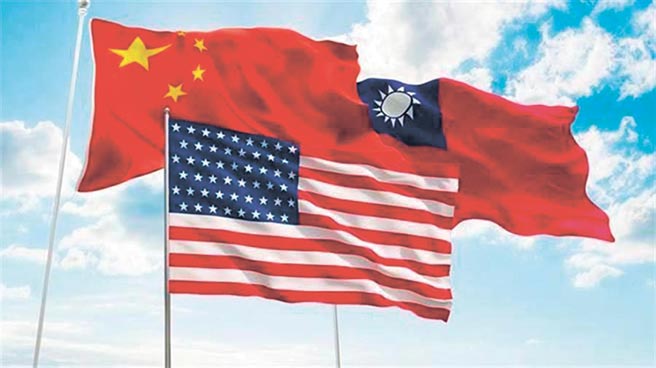
The global economic and political order witnessed a series of consequential developments today, February 13, 2026, as the United States formalized a major trade pact with Taiwan while signaling cautious diplomatic engagement with China. In Washington, officials finalized the Agreement on Reciprocal Trade with Taipei, a deal that maintains tariffs on Taiwanese exports at roughly 15%, down from earlier levels. The agreement is linked to significant Taiwanese commitments to purchase American liquefied natural gas, aircraft, and advanced power equipment and to expand investment in U.S. technology sectors. This move is widely viewed as an effort to reinforce high-technology supply chains, particularly in semiconductors, while securing long-term energy and industrial export demand.
Simultaneously, President Donald Trump confirmed plans for a high-stakes visit to Beijing in April to meet with President Xi Jinping. The announcement comes amid efforts to stabilize a long-running trade dispute and extend existing areas of economic cooperation. While tensions remain over market access and industrial policy, both sides appear to be pursuing a calibrated diplomatic approach that balances strategic competition with limited engagement. The administration continues to emphasize reciprocal trade terms and measurable reductions in bilateral imbalances as conditions for deeper cooperation.
The domestic front in the United States, however, faces renewed scrutiny as fresh labor market signals and shifting expectations around artificial intelligence revenues contributed to volatility in global technology stocks. Investor sentiment weakened as hiring trends showed signs of moderation and market participants reassessed near-term growth assumptions. Analysts noted that although overall unemployment indicators remain relatively stable, tighter financial conditions and prior monetary tightening by the Federal Reserve may be gradually cooling economic momentum more than previously anticipated.
Environmental policy also underwent a major shift as the White House moved to revoke the scientific finding that greenhouse gas emissions endanger human health, a decision with significant regulatory implications. The action undermines a key legal basis used in past federal emissions rules and signals a broader rollback of climate-focused policies. Administration officials framed the change as a step toward reducing regulatory burdens and promoting domestic energy development, while environmental groups and several international partners criticized the move as a setback for global climate cooperation.
In the Asia-Pacific region, the economic narrative is one of both growth and localized disruption. Taiwanese officials indicated that the island’s GDP per capita is on track to surpass the $40,000 threshold, supported by sustained semiconductor demand and investment from global technology firms such as Nvidia and Micron Technology. Meanwhile, in Vietnam, the conglomerate Vingroup secured a top ranking in Time Magazine’s list of Asia-Pacific’s leading companies for 2026, underscoring the growing influence of Southeast Asian enterprises. In India, however, security concerns emerged as several schools in Delhi were evacuated following bomb threats, prompting heightened public anxiety and a large-scale response from authorities.
As the day progresses, the convergence of these developments illustrates a world in transition, where trade increasingly functions as an instrument of geopolitical alignment and domestic economic priorities often compete with international environmental commitments. Investors and policymakers alike are now looking toward upcoming presidential summits and future communications from the Federal Reserve to determine whether today’s market volatility represents a temporary correction or the early stages of a broader cyclical shift in the global economy.
Al Jazeera. (2026, February 13). US and Taiwan sign ‘pivotal’ deal to cut trade tariffs. https://www.aljazeera.com/economy/2026/2/13/us-and-taiwan-sign-pivotal-deal-to-cut-trade-tariffs
CommonWealth Magazine. (2026, February 13). US, Taiwan Seal Trade Pact, Cut Tariffs to 15%. https://english.cw.com.tw/article/article.action?id=4621
The Hindu. (2026, February 13). Trump revokes basis of U.S. climate regulation, ends vehicle emission standards. https://www.thehindu.com/news/international/trump-revokes-basis-of-us-climate-regulation-ends-vehicle-emission-standards/article70625830.ece
Latestley. (2026, February 13). Why Tech Stocks Are Falling Today, February 13, 2026?. https://www.latestly.com/business/why-tech-stocks-are-falling-today-february-13-2026-7312418.html
The Japan Times. (2026, February 13). Trump pauses China tech bans ahead of Xi summit. https://www.japantimes.co.jp/news/2026/02/13/world/trump-pause-china-tech-curbs/
News24. (2026, February 13). Breaking news live updates: Bomb threats reported at several Delhi schools. https://news24online.com/india/breaking-news-live-updates-india-bangladesh-elections-pm-tarique-rahman-us-donald-trump-modi-rahul-gandhi/745265/