
The economic trajectory of the United States as of February 2026 points to a noticeable shift toward a more transactional trade posture, gradually moving away from long-standing multilateral norms in favor of bilateral leverage. At the center of this transition is a labor market that economists increasingly describe as being in a phase of measured deceleration. While layoff rates remain historically low, new hiring activity across major industrial sectors appears to be losing momentum. Recent Department of Labor data suggest that initial jobless claims are hovering near the low-200,000 range, while job openings have eased to roughly 7.1 million, down from earlier peaks but still high enough to support consumer spending. This relative stability, however, is being tested by softer consumer sentiment, as surveys indicate growing concern over future income prospects and persistent price volatility pushing expectations indicators toward contraction-associated territory.
President Donald Trump’s trade policy continues to act as a central driver of structural uncertainty. In a series of executive actions, the administration has reinforced an “America First” framework emphasizing reciprocity and strategic leverage. This approach was evident in early February 2026, when the President approved a short-term extension of the African Growth and Opportunity Act (AGOA). While the move preserves market access for African partners through the end of the year, it also signals a transition toward renegotiated terms that prioritize reciprocal concessions for U.S. exporters. At the same time, newly announced tariffs targeting certain European partners involved in regional military deployments illustrate how economic tools are increasingly linked to geopolitical objectives. For multinational corporations, these developments are accelerating a shift from cost-optimized global supply chains toward more resilient, though potentially more expensive, regional production models.
The Federal Reserve is navigating its own period of recalibration as it manages what policymakers often describe as the “last mile” of the inflation cycle. With core inflation still above the long-term target, the Federal Open Market Committee (FOMC) has maintained a relatively restrictive policy stance. Leadership dynamics are also shaping expectations; discussions around future Fed leadership and policy direction have contributed to speculation about a more hawkish posture focused on price stability and fiscal credibility. Analysts generally argue that policy easing in late 2025 provided support to the labor market, yet inflationary pressures linked to tariffs and services continue to complicate the timing of any further rate reductions.
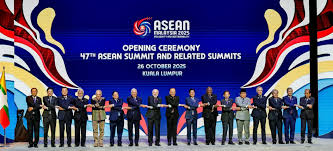
On the corporate front, a widening divergence has emerged between large retailers and segments of the technology sector. Major retail firms have benefited from resilient consumption and international expansion, with some reaching historic valuation milestones tied to global growth strategies. By contrast, parts of the technology sector are facing headwinds from higher financing costs and rising concerns over “technological nationalism,” prompting investors to rotate toward defensive assets. This fragmentation is unfolding alongside broader global shifts, as demand growth in the ASEAN+3 region increasingly rivals that of advanced economies. As 2026 progresses, the U.S. economy faces the dual challenge of sustaining domestic momentum while adapting to a global landscape in which its traditional market dominance is being steadily contested by regional demand centers.
References
AMRO. (2026, February 5). ASEAN+3, Not the US, Is Now the World’s Largest Market. https://amro-asia.org/asean3-not-the-us-is-now-the-worlds-largest-market
Bolvin Wealth Management Group. (2026, February 2). Weekly market commentary: February 2, 2026. https://www.bolvinwealth.com/weekly-market-commentary-february-2-2026-9e150
Federal Reserve Board. (2026, February 4). Speech by Governor Cook on the economic outlook. https://www.federalreserve.gov/newsevents/speech/cook20260204a.htm
Investing.com. (2026, February 4). Initial jobless claims, JOLTs job openings highlight Thursday’s economic events. https://www.investing.com/news/stock-market-news/initial-jobless-claims-jolts-job-openings-highlight-thursdays-economic-events-93CH-4485844
The Voice of Africa. (2026, February 5). Trump signs short-term extension of AGOA, offering limited relief to African economies. https://thevoiceofafrica.com/2026/02/05/trump-signs-short-term-extension-of-agoa-offering-limited-relief-to-african-economies/